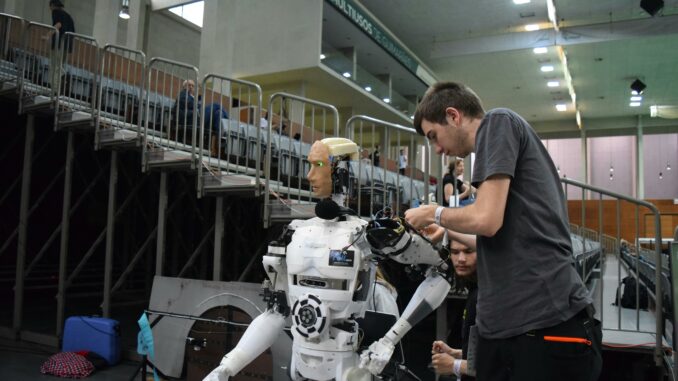
Robotics is a rapidly advancing field that is fundamentally changing the way we live and work. From automated factories to personal assistants, robots are becoming an integral part of daily life. But what exactly is robotics, and how do these intelligent machines work? This article will provide a comprehensive introduction to the basics of robotics, covering the key concepts, technologies, and applications that make up this fascinating field.
What Is Robotics?
At its core, robotics is the branch of technology that deals with the design, construction, operation, and application of robots. Robots are machines designed to perform tasks automatically or semi-automatically. Unlike simple machines that are manually operated, robots can carry out complex actions based on instructions programmed into them or through real-time processing of sensor data. These machines can operate autonomously or be controlled remotely, and they can be programmed to carry out a wide range of tasks, from assembling products to performing surgery.
Robotics combines multiple fields of science and engineering, including mechanical engineering, electrical engineering, computer science, and artificial intelligence (AI). The main goal of robotics is to create machines that can assist humans in performing tasks, often tasks that are repetitive, dangerous, or too complex for humans to do alone.
The Components of a Robot
A robot is made up of several key components that allow it to perform tasks. These components include:
Sensors: Sensors are the “eyes” and “ears” of a robot. They gather data about the robot’s environment and provide feedback to help the robot navigate and interact with its surroundings. Common sensors used in robotics include cameras, infrared sensors, ultrasonic sensors, and force sensors.
Actuators: Actuators are the “muscles” of the robot. They convert energy into motion, enabling the robot to move and perform tasks. These can be motors, hydraulic systems, or pneumatic devices that power the robot’s limbs or other moving parts.
Controller: The controller is the “brain” of the robot. It processes input from the sensors and sends commands to the actuators. The controller runs the robot’s software, which may include algorithms that govern its behavior, decision-making, and task execution.
Power Supply: Every robot requires a power source, whether it’s electricity, batteries, or another form of energy. The power supply provides the necessary energy for the robot’s operations, including powering the sensors, actuators, and controller.
Software: The software running on a robot enables it to process sensor data, make decisions, and control its movements. This software may include artificial intelligence (AI) algorithms, machine learning models, and other forms of data processing that help robots perform tasks with increasing autonomy.
Types of Robots
Robots can be classified into different categories based on their design, functionality, and application. Some of the common types of robots include:
Industrial Robots: These robots are primarily used in manufacturing and assembly lines. They perform tasks such as welding, painting, and packaging, often in environments that are hazardous or require high precision. Industrial robots have been widely used by companies like Toyota, Ford, and BMW to increase efficiency and reduce costs.
Service Robots: Service robots are designed to assist humans in non-industrial environments. These robots can be used for tasks like cleaning, delivering goods, or even providing companionship. Examples include robotic vacuum cleaners like Roomba and healthcare robots that assist with patient care in hospitals.
Medical Robots: Medical robots are used in healthcare to assist in surgeries, rehabilitation, and diagnostics. Robotic surgery systems, such as the Da Vinci Surgical System, allow surgeons to perform minimally invasive procedures with greater precision. Additionally, robots are used for tasks such as drug dispensing, patient monitoring, and aiding mobility.
Autonomous Robots: Autonomous robots are capable of performing tasks independently without human intervention. These robots use sensors, cameras, and algorithms to navigate and interact with their environment. Examples include self-driving cars, drones, and robots used in search-and-rescue missions.
Humanoid Robots: Humanoid robots are designed to resemble human beings in appearance and behavior. These robots have been developed for research purposes and can perform tasks such as walking, talking, and interacting with humans. Famous examples include robots like Honda’s ASIMO and Boston Dynamics’ Atlas robot.
How Robots Work
Robots function through a combination of mechanical systems, control systems, and software. The basic workflow of a robot can be broken down into several steps:
Perception: The robot’s sensors gather data about its surroundings. This can include detecting obstacles, recognizing objects, or identifying people. The sensory information is processed by the robot’s controller, which forms a mental model of the environment.
Processing: The robot’s controller processes the data it receives from the sensors. It uses algorithms, which may include artificial intelligence or machine learning models, to make decisions about what actions to take. For example, a robot vacuum may decide whether to change direction or continue cleaning based on the obstacles it detects.
Action: Once the robot has processed the data and made a decision, it sends commands to its actuators to carry out the action. This could be moving to a specific location, picking up an object, or interacting with a person.
Feedback and Adaptation: Robots often operate in dynamic environments, so they need to adapt to changes. Feedback loops allow robots to adjust their actions based on new sensor data. For example, if a robot picks up an object and the grip is too weak, it may adjust its force accordingly to avoid dropping it.
Applications of Robotics
Robotics has a wide range of applications across various industries. Some of the most notable applications include:
Manufacturing: In factories, robots perform tasks like assembly, welding, packaging, and quality control. Their ability to work continuously without fatigue makes them invaluable in improving production efficiency and reducing operational costs.
Healthcare: Medical robots assist surgeons in performing complex procedures with greater precision, reduce human error, and speed up recovery times. Additionally, robots help with patient monitoring, providing companionship, and even aiding in rehabilitation.
Exploration: Robots are used for exploring environments that are dangerous or unreachable for humans. This includes deep-sea exploration, space missions, and hazardous environments like nuclear disaster zones. Robots like NASA’s Perseverance rover are exploring Mars, conducting research, and sending back valuable data.
Agriculture: Agricultural robots are being used to automate tasks like planting, harvesting, and monitoring crops. These robots improve the efficiency and sustainability of farming by enabling precision agriculture, where data from robots is used to optimize crop yields and reduce waste.
Military and Defense: Robots are used in defense for tasks like bomb disposal, reconnaissance, and surveillance. They help to reduce the risks faced by soldiers in dangerous situations and can operate in environments too hostile for humans.
The Future of Robotics
The future of robotics is incredibly exciting, with advancements in artificial intelligence, machine learning, and materials science. In the coming years, robots are expected to become even more autonomous, capable of learning from experience, and interacting more naturally with humans. The integration of AI will allow robots to make better decisions, adapt to new situations, and collaborate with humans in increasingly complex tasks.
As robots become more prevalent, they will continue to revolutionize industries and change the way we live. However, the rise of robotics also brings challenges, including ethical considerations, job displacement, and the need for regulation. Despite these challenges, the future of robotics holds immense potential to improve lives and create new opportunities across a wide range of sectors.
Conclusion
Robotics is transforming the world by making complex tasks more efficient, accurate, and safe. With ongoing advancements in technology, robots are becoming more intelligent and capable of performing a wider range of activities. Understanding the basics of robotics, including its components, how it works, and its various applications, helps us appreciate the growing role robots play in our daily lives. As the field continues to evolve, we can expect even more innovations that will reshape industries and push the boundaries of what is possible with intelligent machines.
Leave a Reply