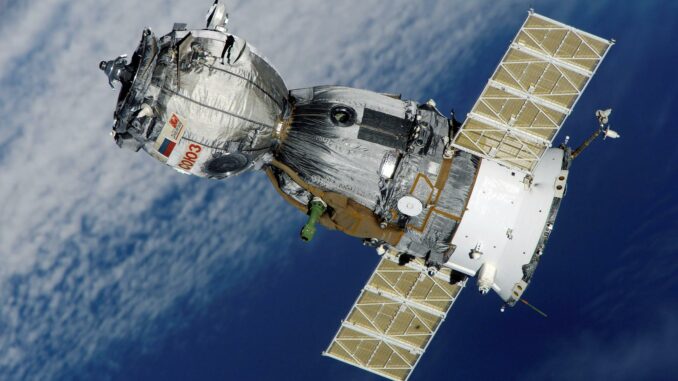
Aerospace technology has made profound strides over the last century, dramatically shaping the way humanity explores both the skies and outer space. From the development of early aircraft to the cutting-edge spacecraft that venture beyond Earth’s atmosphere, the field of aerospace technology has paved the way for groundbreaking discoveries. This article delves into the pivotal role that aerospace technology plays in advancing space exploration, including its contributions to human understanding of space, the technology driving modern missions, and the potential for future space endeavors.
The Beginnings of Aerospace Exploration
Aerospace technology began its journey in the early 20th century with the advent of powered flight. The Wright brothers’ first flight in 1903 marked the beginning of human-powered flight, but it wasn’t until World War II that major advancements in aviation technology took place. Jet engines, radar systems, and advanced aerodynamics became critical to military strategies, laying the foundation for future space exploration.
Space exploration, however, took off in the late 1950s with the launch of the Soviet Union’s Sputnik 1 satellite in 1957. This achievement ignited the space race between the United States and the Soviet Union, culminating in significant milestones such as Yuri Gagarin’s spaceflight in 1961 and the historic Apollo 11 mission, which saw humans land on the Moon in 1969. These early missions highlighted the importance of advanced aerospace technologies in enabling humans to explore space and achieve new frontiers.
The Evolution of Spacecraft Technology
The development of spacecraft technology is one of the most remarkable achievements of aerospace engineering. Over the years, spacecraft have evolved from simple satellites into complex vehicles capable of carrying humans and scientific instruments to destinations far beyond Earth’s orbit.
One of the most significant advancements in spacecraft technology is the development of reusable spacecraft. In 1981, NASA introduced the Space Shuttle, a reusable space vehicle capable of launching into space and returning to Earth multiple times. The Shuttle made space exploration more cost-effective and accessible by lowering the cost per mission. Though the program ended in 2011, the legacy of reusable spacecraft has inspired new technologies and private sector investments in space travel.
Modern spacecraft, like SpaceX’s Dragon capsule and the Orion crew vehicle developed by NASA, are built to take astronauts and supplies to the International Space Station (ISS) and beyond. These spacecraft are equipped with cutting-edge propulsion systems, advanced life support systems, and enhanced navigation and communication technology, enabling long-duration space missions. The advancements in spacecraft technology are critical in making human space exploration more feasible and sustainable.
Propulsion Systems: Pushing the Boundaries
Aerospace technology’s role in space exploration also includes the development of propulsion systems that allow spacecraft to travel vast distances. Traditional chemical rockets, which use fuel and oxidizers to generate thrust, have powered most space missions to date. However, innovations in propulsion are pushing the boundaries of space travel.
One such advancement is ion propulsion, which uses electrically charged ions to generate thrust. Ion thrusters are much more efficient than traditional chemical rockets and can operate continuously for extended periods, making them ideal for deep space missions. NASA’s Dawn spacecraft, for example, used ion propulsion to travel to the dwarf planet Ceres, providing valuable data about the asteroid belt.
In addition to ion propulsion, nuclear thermal propulsion is also being researched as a means to make long-duration space missions more efficient. Nuclear thermal rockets use nuclear reactions to heat a propellant, creating a higher level of thrust. This technology could significantly reduce travel time to distant destinations like Mars, making it a key area of focus for future space exploration.
Space Exploration Today: New Frontiers and Innovation
The current era of space exploration is defined by the convergence of government agencies, private companies, and international collaborations. In recent years, the private sector has taken a leading role in developing new technologies that are changing the landscape of space exploration. Companies like SpaceX, Blue Origin, and Rocket Lab have pioneered reusable rocket technology, dramatically reducing the cost of space missions and increasing the frequency of launches.
SpaceX, in particular, has made headlines with its development of the Falcon 9 and Falcon Heavy rockets, which are capable of carrying payloads to low Earth orbit, the Moon, and Mars. SpaceX’s ambitious Starship program aims to create a fully reusable spacecraft capable of interplanetary travel, with Mars as its primary target. By reducing the cost and increasing the reliability of space transportation, private companies are opening up new opportunities for space exploration, including the possibility of human settlement on other planets.
NASA continues to play a pivotal role in space exploration with initiatives such as the Artemis program, which aims to return humans to the Moon by 2024. The Artemis missions will build on the lessons learned from the Apollo program, using advanced technology to establish a sustainable human presence on the Moon. These missions are seen as stepping stones toward future crewed missions to Mars and beyond.
Space telescopes, like the Hubble Space Telescope and the recently launched James Webb Space Telescope, are revolutionizing our understanding of the universe. These advanced instruments allow scientists to study distant galaxies, stars, and exoplanets, providing insights into the origins of the universe and the possibility of life beyond Earth.
The Role of Artificial Intelligence and Automation
One of the most transformative aspects of modern aerospace technology is the integration of artificial intelligence (AI) and automation. In the past, space missions relied heavily on human operators to control spacecraft and analyze data. Today, AI and automation play a significant role in making missions more efficient, autonomous, and cost-effective.
AI is used to optimize spacecraft navigation, process data from scientific instruments, and even assist in decision-making during missions. The use of AI in space exploration is essential for long-duration missions, where human involvement is limited due to communication delays. AI-powered systems can autonomously adjust spacecraft systems, conduct scientific experiments, and respond to unexpected conditions, reducing the need for constant monitoring from Earth.
Robotic missions have also become a cornerstone of space exploration. Rovers like NASA’s Perseverance, which is currently exploring Mars, use advanced AI to analyze terrain, conduct experiments, and make decisions on how to navigate the Martian surface. These robots allow for exploration in environments too dangerous or distant for humans to reach, and they continue to provide valuable data about other planets and moons in our solar system.
The Future of Aerospace Technology
Looking ahead, the future of aerospace technology promises even greater advancements that will expand humanity’s reach into space. Technologies like space tourism, asteroid mining, and space-based manufacturing are just beginning to take shape. The rise of commercial space travel, pioneered by companies like Virgin Galactic and Blue Origin, is making space more accessible to non-professional astronauts and tourists. This shift will likely result in the development of new technologies that could change how we view and experience space.
The dream of establishing a permanent human presence on the Moon and Mars is becoming increasingly attainable thanks to advances in aerospace technology. Space habitats, advanced propulsion systems, and sustainable life support technologies are being developed to make long-term human settlement in space possible. As these technologies continue to evolve, the prospect of humans living and working in space could become a reality within the next few decades.
Conclusion
Aerospace technology has played a fundamental role in expanding the boundaries of human knowledge and exploration. From its early beginnings in aviation to its current role in space exploration, aerospace technology has enabled humans to venture beyond Earth and explore the stars. With the ongoing development of advanced spacecraft, propulsion systems, AI, and automation, the future of space exploration looks incredibly promising. As we continue to push the frontiers of space, aerospace technology will remain at the heart of these groundbreaking efforts, helping humanity pioneer new worlds and unlock the mysteries of the cosmos.
Leave a Reply