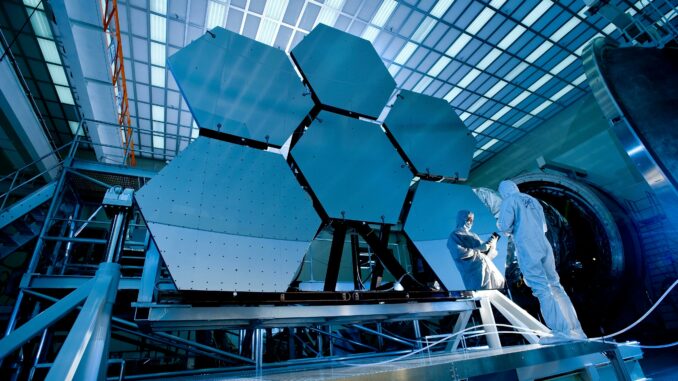
The field of aerospace technology has seen extraordinary progress over the past century, transforming from the first flights of airplanes to missions that explore distant stars and planets. Advances in aerospace technology have revolutionized not only how we travel but also how we understand the universe. From the development of commercial aviation to the exploration of outer space, these technological breakthroughs are opening up new possibilities for both Earth and beyond. This article explores some of the most exciting developments in aerospace technology and their potential impact on the future of aviation, space exploration, and beyond.
The Evolution of Aerospace Technology
Aerospace technology encompasses a wide range of innovations related to both the aviation and space industries. While the early 20th century marked the dawn of powered flight with the Wright brothers’ first successful flight in 1903, aerospace technology has evolved dramatically since then. World War II spurred significant advancements in aircraft design and performance, and the Cold War fueled the race for space exploration, culminating in historic achievements such as the Apollo moon landing in 1969.
Over the last few decades, aerospace technology has progressed from jet propulsion systems and supersonic flight to spacecraft capable of traveling beyond the Earth’s atmosphere. The development of reusable rockets, unmanned aerial vehicles (UAVs), and cutting-edge space telescopes are just a few examples of how aerospace technology continues to shape the future of both our planet and the universe.
Commercial Aviation: The Future of Air Travel
One of the most visible areas of aerospace technology is in the field of commercial aviation. Airplanes have become an essential part of modern transportation, allowing people to travel around the world in a matter of hours. However, the future of air travel is poised for even greater changes, as new technologies emerge to improve efficiency, sustainability, and safety.
One such innovation is the development of electric aircraft. Companies are working on electric planes that have the potential to revolutionize air travel by reducing carbon emissions and lowering operating costs. Electric planes are also quieter than traditional aircraft, which could significantly reduce noise pollution near airports. While fully electric commercial airliners are still a long way from widespread use, progress is being made in developing small, regional electric aircraft for short-haul flights.
Another exciting development in commercial aviation is the rise of supersonic flight. Supersonic jets, which can travel faster than the speed of sound, were first introduced with the Concorde in the 1970s. However, commercial supersonic travel was discontinued due to high operating costs and environmental concerns. New supersonic aircraft designs are emerging, with companies like Boom Supersonic leading the charge in creating a faster, more sustainable alternative to traditional subsonic airliners. These new supersonic jets aim to cut flight times in half, making long-distance travel more efficient and accessible.
Additionally, advancements in aerodynamics and materials science are making aircraft more fuel-efficient. Lighter, stronger materials such as carbon fiber composites are being used to reduce the weight of aircraft and improve fuel efficiency. More efficient engines and enhanced air traffic management systems are also helping to reduce the environmental impact of air travel.
The Rise of Space Exploration
The exploration of outer space is perhaps the most exciting and dynamic area of aerospace technology today. In recent years, space exploration has entered a new era, marked by the rise of private companies, advancements in propulsion technologies, and the development of new spacecraft capable of carrying astronauts and cargo to distant destinations.
One of the most significant developments in space exploration is the advent of reusable rocket technology. Companies like SpaceX, Blue Origin, and Rocket Lab have developed rockets that can land back on Earth after launching their payloads into space, drastically reducing the cost of space travel. SpaceX’s Falcon 9, for example, is capable of returning to a landing pad or a drone ship after launching satellites or cargo to the International Space Station (ISS), and it has opened up new possibilities for regular space missions. This technology has revolutionized the economics of space exploration, making it more accessible and sustainable.
Additionally, advancements in propulsion technology are enabling faster and more efficient travel through space. Traditional chemical propulsion systems, which have been used for decades, are being complemented by new propulsion methods, such as ion thrusters and nuclear propulsion. These technologies promise to make long-duration space missions more feasible, allowing spacecraft to travel to destinations beyond Earth’s orbit, such as Mars and the outer planets.
NASA’s Artemis program, which aims to return humans to the Moon by 2024, is one example of the growing ambition in space exploration. The program will utilize new spacecraft, such as the Space Launch System (SLS) and the Orion crew vehicle, to transport astronauts back to the lunar surface. In addition to lunar exploration, the program is also designed to pave the way for crewed missions to Mars in the coming decades.
The Role of Artificial Intelligence in Aerospace
Artificial intelligence (AI) is playing an increasingly important role in the development of aerospace technologies. AI is being used in everything from aircraft design and manufacturing to mission planning and autonomous space exploration.
In the aviation industry, AI is being applied to improve safety and efficiency. For example, AI-powered systems can monitor aircraft systems in real time, detecting potential issues before they become critical. AI is also being used to optimize flight routes, reducing fuel consumption and travel time. Additionally, AI is being integrated into cockpit systems to assist pilots, offering real-time information and recommendations to improve decision-making.
In space exploration, AI is enabling autonomous operations for spacecraft and rovers. NASA’s Perseverance rover, which landed on Mars in 2021, uses AI to analyze its surroundings and make decisions without relying on instructions from Earth. This capability is essential for missions to distant planets, where communication delays can make real-time control impossible. AI is also being used to process vast amounts of data collected from space telescopes, satellites, and scientific instruments, enabling researchers to make new discoveries faster and more efficiently.
The Future of Aerospace: Colonization of Other Planets
As we look toward the future of aerospace technology, one of the most exciting possibilities is the colonization of other planets. Advances in spacecraft technology, life support systems, and habitat construction are making it increasingly likely that humans will establish permanent settlements on the Moon, Mars, and potentially beyond.
The development of space habitats and sustainable living conditions will be critical for long-term human presence in space. NASA’s Gateway project, which aims to establish a lunar orbiting outpost, will serve as a staging point for missions to the Moon and Mars. This will involve the creation of habitats capable of supporting human life for extended periods, including systems for oxygen generation, food production, and waste recycling.
Private companies like SpaceX are also developing spacecraft designed for interplanetary travel. SpaceX’s Starship, a fully reusable spacecraft, is intended for missions to Mars and other destinations in the solar system. The goal of these missions is to create self-sustaining colonies that can thrive on other planets, ensuring the survival of humanity beyond Earth.
Conclusion
The advancements in aerospace technology are transforming the way we explore both our planet and the universe. From commercial aviation innovations that promise faster and more sustainable air travel to breakthroughs in space exploration that could eventually lead to the colonization of other planets, the future of aerospace technology holds incredible potential. As technology continues to evolve, we can expect even more ambitious missions, including the possibility of reaching distant stars and unlocking the mysteries of the cosmos. With these advances, humanity’s journey from the skies to the stars has only just begun.
Leave a Reply