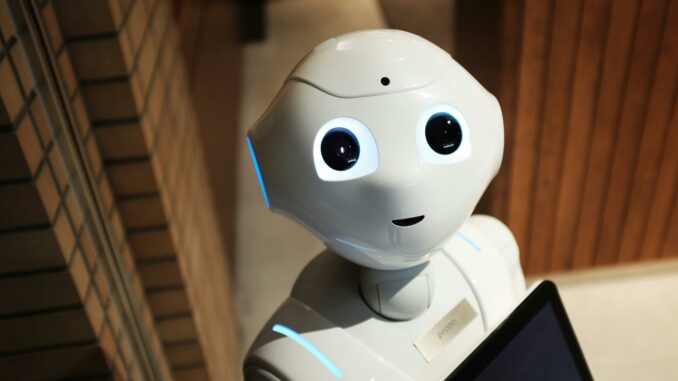
In recent years, artificial intelligence (AI) has emerged as one of the most significant technological developments in human history. From self-driving cars to virtual assistants and advanced robotics, AI is influencing nearly every aspect of our lives. However, with its rapid growth, there are ongoing debates about whether AI is a friend or foe. While some view it as a powerful tool that can solve some of humanity’s greatest challenges, others fear its potential to cause harm. This article explores the arguments for and against AI, seeking to determine whether it is ultimately a force for good or a dangerous development.
The Rise of Artificial Intelligence
Artificial intelligence refers to the ability of machines to perform tasks that would typically require human intelligence. This includes tasks like problem-solving, decision-making, language translation, image recognition, and even learning from experience. With the advent of machine learning (ML) and deep learning, AI has evolved into systems that can learn from data and improve their performance over time, making it more powerful and capable than ever before.
AI is already integrated into many aspects of our daily lives, from voice assistants like Siri and Alexa to recommendation systems on Netflix and Amazon. It is also transforming industries such as healthcare, finance, transportation, and education, offering the potential for significant improvements in efficiency, productivity, and innovation.
The Case for AI as a Friend
Many supporters of AI view it as an invaluable tool that can help solve some of the world’s most pressing issues. AI offers a wide range of benefits that could make our lives better in numerous ways:
Improved Healthcare: One of the most promising applications of AI is in healthcare. AI algorithms can analyze medical data, detect diseases, and even recommend personalized treatment plans. In fact, AI-powered diagnostic tools are already being used to detect conditions like cancer, heart disease, and neurological disorders with greater accuracy than human doctors alone. AI can also help in drug discovery, speeding up the process of finding new medications and treatments.
Increased Efficiency: AI can automate many routine and repetitive tasks, leading to greater efficiency in various industries. For example, in manufacturing, AI-powered robots can assemble products with precision and speed, reducing human error and improving production times. In customer service, AI-driven chatbots can handle inquiries, process orders, and troubleshoot issues 24/7, providing immediate assistance to customers and reducing the burden on human employees.
Enhanced Safety: AI is playing a crucial role in enhancing safety across various sectors. In transportation, autonomous vehicles use AI to navigate roads, avoid accidents, and optimize routes. Similarly, AI systems can monitor critical infrastructure, such as power grids and pipelines, detecting issues before they become catastrophic and ensuring that they function optimally.
Tackling Climate Change: AI also has the potential to contribute to the fight against climate change. AI algorithms can analyze environmental data to predict weather patterns, track emissions, and optimize energy use. This can help governments and organizations make data-driven decisions on reducing carbon footprints and adopting sustainable practices.
Advancing Scientific Research: AI is accelerating scientific research by analyzing vast amounts of data much faster than humans could ever do. For example, AI is helping researchers in fields like genomics, chemistry, and physics make breakthroughs that would have been impossible without machine assistance. AI is also enabling advancements in personalized medicine, space exploration, and other scientific frontiers.
The Case for AI as a Foe
While AI holds great promise, it also raises several concerns that cannot be ignored. Critics argue that, without proper regulation and oversight, AI could have detrimental effects on society. Some of the main concerns about AI include:
Job Displacement: One of the biggest fears surrounding AI is the potential for mass job displacement. As AI systems become more capable of performing tasks traditionally done by humans, many jobs could become obsolete. This is especially true in sectors like manufacturing, retail, and customer service, where AI-driven automation can replace workers. While new jobs may be created in the AI sector, there is a risk that many workers will not have the skills required for these new positions, leading to a rise in unemployment and economic inequality.
Bias and Discrimination: AI systems are only as good as the data they are trained on, and if the data is biased, the AI system will be biased too. This can lead to discriminatory outcomes, especially in sensitive areas like hiring, law enforcement, and lending. For instance, AI algorithms used in recruitment could favor one demographic over others if they are trained on biased historical data. Similarly, facial recognition systems have been found to have higher error rates when identifying people of color, leading to concerns about racial profiling and unjust treatment.
Loss of Privacy: The widespread use of AI in surveillance and data collection raises significant concerns about privacy. AI systems can track our online activities, monitor our behavior, and even predict our actions based on personal data. This could lead to a loss of individual privacy and the potential for misuse of personal information by governments, corporations, or malicious actors. The rise of AI-powered surveillance systems also poses a threat to civil liberties, as governments could use AI to monitor and control populations.
Autonomous Weapons and Military Use: The development of AI-powered weapons, such as drones and autonomous combat systems, has raised alarms about the future of warfare. While AI could help improve military efficiency, the idea of machines making life-or-death decisions raises serious ethical concerns. Autonomous weapons could be used in conflicts without human intervention, potentially leading to unintended consequences and escalating violence. Additionally, the use of AI in warfare could increase the risk of global conflicts and destabilize international security.
Existential Risk: Some experts, including prominent figures like Stephen Hawking and Elon Musk, have warned about the potential existential risk posed by AI. The concern is that as AI becomes more advanced, it could surpass human intelligence and potentially act in ways that are harmful to humanity. While this scenario, known as artificial general intelligence (AGI), is still far from being realized, the possibility of AI systems acting autonomously without human control raises significant ethical and safety concerns.
Striking a Balance
Despite the concerns surrounding AI, it is clear that the technology holds immense potential to improve lives and solve complex global problems. The key to ensuring that AI remains a friend rather than a foe lies in responsible development, regulation, and oversight. Governments, organizations, and researchers must work together to establish ethical guidelines for AI use, ensuring that AI systems are transparent, unbiased, and aligned with human values.
Moreover, as AI continues to evolve, it is crucial to invest in education and workforce development to prepare individuals for the changing job market. By upskilling workers and fostering innovation, society can ensure that the benefits of AI are shared equitably and that those affected by automation are supported in transitioning to new opportunities.
Conclusion
The rise of artificial intelligence presents both tremendous opportunities and significant challenges. Whether AI proves to be a friend or foe depends on how we approach its development and integration into society. With careful planning, regulation, and a commitment to ethical principles, AI has the potential to be a powerful ally in addressing some of humanity’s greatest challenges. However, if left unchecked, AI could become a force that exacerbates inequality, threatens privacy, and endangers our future. The path we take will determine the role AI plays in shaping the world for generations to come.
Leave a Reply